

Château de Montastruc in brief
Château de Montastruc stands on a rocky spur at Lamonzie-Montastruc, in the Périgord (Dordogne), 11 kilometres from Bergerac. It has been listed as a historic monument since 2001.
The castle is offered for seasonal rental as a whole property, by the week: 10 bedrooms over two floors, up to 20 people in residence, a swimming pool of 14 metres by 6 and 20 hectares of private grounds. Individual bedrooms are never let separately.
It is rented for family gatherings, holidays with friends, weddings and receptions. It is a private property and is not open to visitors.
The Name “Montastruc”
The name of the castle is of Latin origin, and is found in a few other monuments or cities of the South-West of France. It is most probably meaning: “Mount under the good stars” or lucky, happy mount. The romans referred to someone lucky as “astrucus”, born under good stars…
The valley of the little river “Caudeau”, at the foot of Montastruc, keeps numerous traces of human habitat from prehistory to the period of the Roman Empire.


Vth Century
Through the 5th century, the invasion by the Germans in 407, followed by the Visigoths’ and finally, by the annexation of Aquitaine to the kingdom of the Francs by Clovis (507), bring Montastruc into the High Middle-Age. These troubled times lead its inhabitants into the caves and galleries of its emerging rock, later fortified and isolated by deep moats.
Rise & Fall of the D’Abzac
La Monzia (La Moinerie) is mentioned into documents of the 13th century, under the protection of Montastruc, fief of the Castrum of Montclar. In 1309, Hugues 1st d’Abzac, lord of Clerans and knight for Montclar, is benefiting from a donation of assets in La Monzia, including the “domus” of Montastruc.
In 1329, his son Hugues 2nd d’Abzac fortifies Montastruc over its antique existing bases. Rudel 4th de Mouleydier, lord and baron of Montclar, allows the works to be done and gets a solemn homage as suzerain, in the chapel of Lamonzie. Montastruc and the d’Abzac become from that moment a permanent threat for Montclar and its barons.
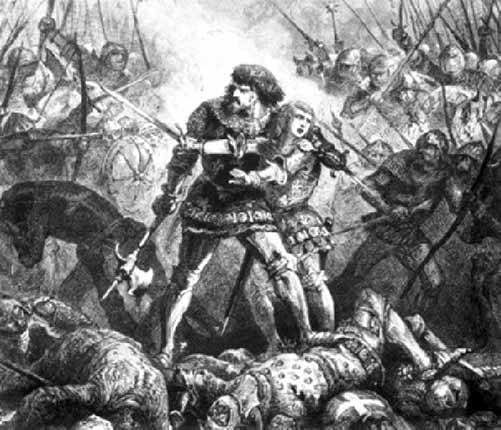
In 1437, the “Reppayrium de Monte Astruco” is mentioned as fief of Bertrand d’Abzac. On the 14th of February 1439, Amaury d’Estissac, heir of the châtellenie of Montclar, donates to Bertrand d’Abzac all the rights of high, mid and low justice that he could have over Montastruc, under the condition of a symbolic homage of a pair of white gloves. But Bertrand d’Abzac, is made prisoner after his invasion of the city of Domme, is beheaded in Limoges on the 1st of March 1439 by order of Charles 7th and the demolition Montastruc, to the height of the infamy (“à hauteur de l’infamie”) is undertaken following the criminal trial started in 1438 – however the destruction will be only partial.
In 1449, Jean of Bretagne returns to Jeanne de Beynac, widow of Bertrand d’Abzac, the estate of Montastruc against submission to the Royal authority. The castle is restored from 1480, supported by royal decree (“Lettres patentes”) from Louis 11th dated September 1475.
Seasonal rental
Rent the Château de Montastruc for your event
Ten bedrooms, a 20-hectare park and a swimming pool, for twenty people, a week or more. Send your dates and you will receive the availability and the rate for that period.
XVIth – XVIIth Century
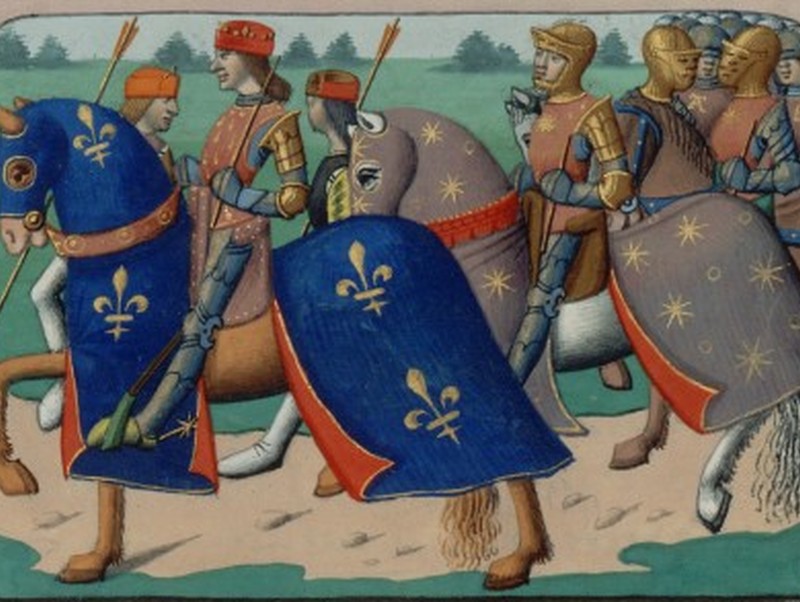
In 1568, on the day of Christmas, Blaise de Monluc, trusted by Catherine de Médicis to maintain order in Guyenne, starts the siege of Montastruc. Two cannons oblige the Huguenot troop to surrender. New siege by the seneschal of Périgord in 1569, who takes it from the Protestants, and returns it again to the d’Abzac.
In 1637, the second rebellion of the “croquants” (peasants), is led in the forests not far from Montastruc by La Mothe La Foret, Charles d’Abzac’s brother in law, and Grellety, farmer of Charles’ lands…
XVIIth – XXth Century
On the 26th of May 1650, the fortress walls of Montastruc see at their foot the defeat of the troop of Monsieur de La Valette, by the dukes of Bouillon and of La Rochefoucauld, while these were accompanying Madame the Princess of Condé and her son, the duke of Enghien to Bordeaux, during the last “grande fronde” (revolt of the nobles against the king).
Interestingly, the revolution period does not affect Montastruc.
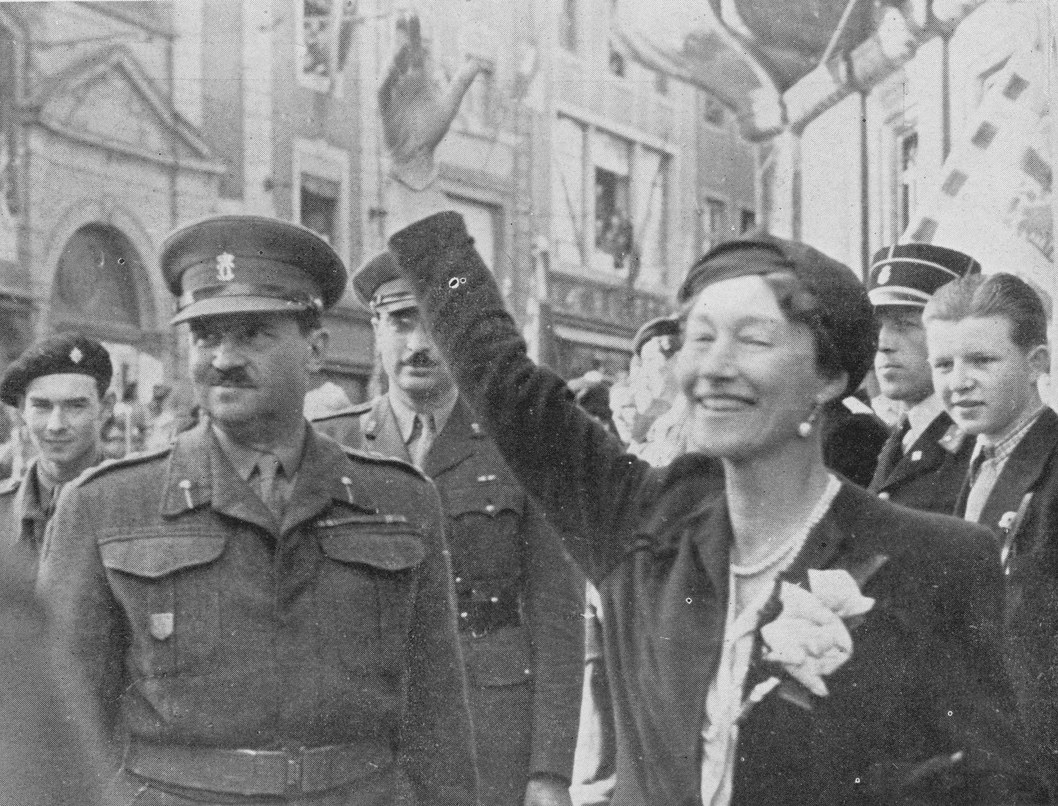
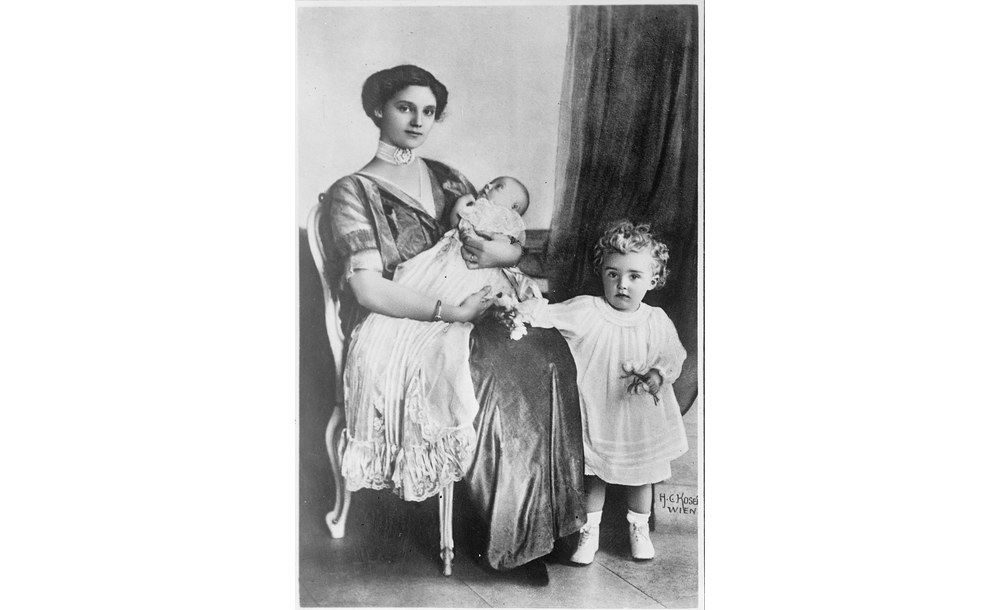
More recently, in May 1940, HRH the grand duchess Charlotte of Luxembourg and her family exiled themselves in the chateau de Montastruc, ex-filtrated from Luxembourg in extremis by France before the arrival of the German troops. They remained there for a few months under the protection of a section of Senegalese riflemen, before gaining Portugal… On June 16th 1940, they were joined in Montastruc by the last empress-queen of Austria-Hungary Zita, sister of Felix of Bourbon- Parma, husband of Charlotte of Luxembourg. On her way to exile towards Portugal via Bordeaux and Spain, Zita transited through Montastruc with her 8 children of which her elder son Otto of Habsburg, archduke of Austria.
While Montastruc was empty, a clandestine resistance hospital was organized in the chateau in June 1944.

Today
Fief of the d’Abzac since the 13th century, Montastruc changes hands through alliances and goes to the Ferrand de Mauvezin, the Peruse des Cars, the du Garrich d’Uzech, and then in 1849, goes to the marquis de Lostanges de Saint-Alvere followed by the Loeff in 1936. After the last war, it is owned by the Ordonneau family, and then changes hands briefly before coming in 1998 to Philippe Raynaud de Fitte and his wife Ségolène de Marcellus.
This is the beginning of an extensive and meticulous restoration work.
Ségolène de Marcellus is of direct descent from Marie-Louis Andre Charles (alias Lodoïs) de Martin du Tyrac, 4th count of Marcellus (1795-1861), who after difficult and animated negotiations, purchased the statue known today as Venus de Milo, and brought it back to France where it was offered on March 1st 1821 to the king Louis XVIII who donated the statue to the Louvre.

Frequently asked questions about the history of the château
The questions most often asked about the eight centuries of Château de Montastruc and about the site that carries it.
How long has the site of Château de Montastruc been inhabited?
The Caudeau valley, at the foot of Château de Montastruc, holds traces of settlement from prehistory to Roman times. From the 5th century onwards, invasions drove the inhabitants into the cluseaux and caves of the rocky spur, later fortified and cut off from the plateau by deep ditches. The site has been inhabited without interruption ever since.
Where does the name of Château de Montastruc come from?
The name is of Latin origin and is found on other monuments and in other towns of south-west France; its meaning is disputed. Among the likeliest readings are the fortified hill, mons adstructum, and the hill beneath the stars.
Which family held Château de Montastruc the longest?
The d’Abzac family, from the 13th century onwards. In 1309, Hugues I d’Abzac received a grant of property at La Monzia, including the domus of Château de Montastruc, and his son Hugues II fortified it in 1329 on older foundations. The fief then passed by marriage to several families, down to the marquesses of Lostanges de Saint-Alvère in 1849 and the Loeff family in 1936.
Was Château de Montastruc ever besieged?
On Christmas Day 1568, Blaise de Monluc, charged by Catherine de Médicis with keeping order in Guyenne, laid siege to Château de Montastruc: two cannon forced the Huguenot garrison to surrender. The seneschal of Périgord took it back from the Protestants in 1569 and returned it to the d’Abzac family. A century earlier, following the criminal trial of 1438, its demolition had been ordered, and it was restored from 1480 under letters patent of Louis XI.
Did Château de Montastruc play a part in the Second World War?
In May 1940, Grand Duchess Charlotte of Luxembourg and her family, taken out of Luxembourg before the German troops arrived, went into exile at Château de Montastruc and stayed some months before reaching Portugal. On 16 June 1940, Empress Zita, the last empress and queen of Austria-Hungary, joined them there with her eight children, among them her eldest, Otto von Habsburg.
